
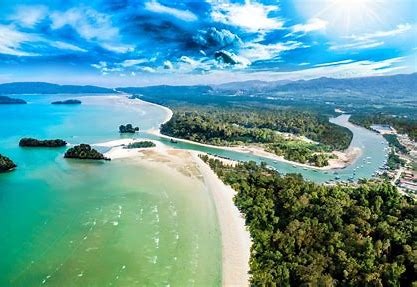
Coastal Ecosystems
Coastal ecosystems are dynamic environments where land meets the sea comprising mangroves, salt marshes, estuaries, coral reefs, seagrass beds, and sandy beaches. These ecosystems provide vital services such as shoreline protection, biodiversity support, carbon storage, and food resources. Our content and research are dedicated to understanding, conserving, and restoring these ecologically and economically valuable zones.
Through interdisciplinary approaches combining marine science, ecology, remote sensing, hydrology, and socioeconomics, we aim to guide sustainable management and climate resilience of coastal regions.
Core Content Areas
- Biodiversity and Habitat Dynamics
Study of species interactions, community structures, and habitat changes in mangroves, coral reefs, estuaries, and coastal wetlands. - Ecosystem Services and Functioning
Analysis of services such as nutrient cycling, coastal protection, fisheries productivity, and carbon sequestration. - Coastal Erosion and Sediment Transport
Monitoring and modeling of coastal processes affecting landforms, beach stability, and shoreline change. - Water Quality and Pollution
Investigating the impact of agricultural runoff, marine debris, oil spills, and wastewater on coastal health. - Climate Change Impacts
Assessing sea-level rise, ocean acidification, and temperature shifts and their effects on vulnerable coastal ecosystems. - Integrated Coastal Zone Management (ICZM)
Planning and policy development that balances ecological preservation with community livelihoods and economic development. - Community-Based Conservation
Empowering local stakeholders to engage in sustainable resource use and ecosystem stewardship. - Nature-Based Solutions for Coastal Protection
Using living shorelines, restored wetlands, and coral reefs to reduce flood risk and buffer against storm surges. - Blue Carbon Research
Quantifying carbon storage in mangroves, salt marshes, and seagrasses to support climate mitigation strategies. - Remote Sensing and GIS in Coastal Monitoring
Advancing the use of satellite imagery, drones, and spatial modeling for real-time ecosystem tracking and change detection. - Marine Spatial Planning
Designing multi-use coastal zones that integrate conservation, fisheries, tourism, and infrastructure. - Resilient Coastal Communities
Linking ecological research with social science to enhance adaptive capacity and disaster preparedness of coastal populations.
- Biodiversity and Habitat Dynamics
Our coastal ecosystem research supports global efforts to protect the planet’s most vulnerable and productive environments. Through science, technology, and collaboration, we strive to ensure thriving coastlines for both nature and people.